


How to Find Missing Money After a Layoff: Claim Unclaimed Cash for Free


"When something looks too good to be true, it usually is"
In most cases, that does hold true. Nothing in life is ever free, so no one is going to just hand you a check for money without asking for something in return.
Normally that is true, but in trying to find out what happened to an old IRA of mine, I stumbled across MissingMoney.com.
One of the easiest wins during a job search is money you already earned but never collected: an old security deposit, a final paycheck that never cleared, a refund from an account you closed years ago. Billions of dollars in these forgotten funds sit with state governments right now, and MissingMoney.com is the free, official place to search for yours.
Nationally, about 1 in 7 people (roughly 33 million individuals) have unclaimed property waiting for them, and in a single recent fiscal year states returned over $4.4 billion to owners. This post explains how to find missing money using MissingMoney.com: what the tool is, the kinds of money it can uncover, and exactly how to search and file a claim.
What Is MissingMoney.com?
MissingMoney.com is a free, multi-state search tool for unclaimed property (money and assets that a business or institution owes you but has lost track of). It is sponsored by NAUPA, the National Association of Unclaimed Property Administrators, which is the association of the state officials who actually run these programs.
Here is how the money gets there. When a company (a bank, an employer, an insurer, a utility) cannot reach you for a set period of time (usually one to five years, depending on the state), the law requires it to hand the funds over to the state through a process called escheatment. The state then acts as a custodian, holding the money indefinitely until the rightful owner (that is you) comes to claim it.
MissingMoney.com lets you search many participating states at once from a single page, then points you to the official state website to complete each claim. Nearly every state participates (Hawaii is the notable exception), along with Puerto Rico and the Canadian province of Alberta.
Why you can trust it
MissingMoney.com is the only unclaimed property search site endorsed by NAUPA, it carries no advertisements, and both searching and filing are completely free. It is government-adjacent, not a private "finder" service that takes a cut of your money.
What Kinds of Money Can It Help You Find?
Unclaimed property comes in two broad forms. Most of it is intangible (cash and financial accounts), but it can also be tangible (physical items from a safe deposit box). Common examples include:
Cash and account balances
• Old checking, savings, and CD accounts that went dormant after a period of no activity
• Uncashed paychecks, final wages, commissions, and bonus checks (very common after leaving a job)
• Utility and rental security deposits that were never refunded after you moved
• Customer overpayments and refund checks from businesses you no longer use
Investments and insurance
• Stocks, mutual funds, and uncashed dividend checks
• Life insurance payouts, policy refunds, and annuity payments (sometimes owed to beneficiaries who never knew a policy existed)
• Trust distributions and escrow balances
Other property
• Unredeemed money orders, traveler's checks, and (in some states) gift certificates
• Mineral and royalty payments
• Safe deposit box contents (jewelry, coins, collectibles, and paper certificates that were never retrieved)
Good to know
MissingMoney.com only lists property that has already been turned over to a state. Active, still-open accounts at your bank, brokerage, or employer will not appear here, so it is worth reviewing those directly too. Individual amounts vary widely, from around $25 to well into six figures, so a match is always worth pursuing.
How to Find Missing Money in a Few Minutes (Step by Step)
The whole process is free and usually takes just a few minutes to search. Here is how to do it:
1. Go to the official site. Open MissingMoney.com and look for the claim search. The direct link is https://missingmoney.com/app/claim-search. Make sure the address is correct so you land on the real, free tool.
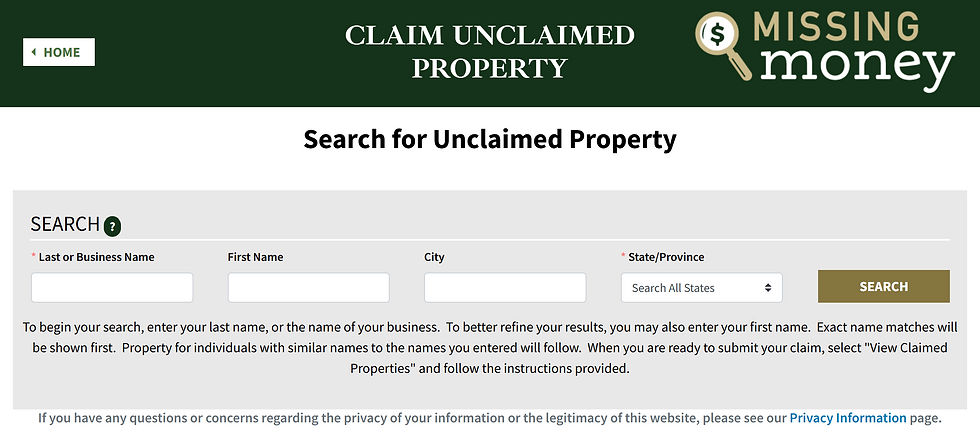
2. Enter your name. Type your first and last name to start. You can leave the state field broad to search everywhere at once, which is smart because property is held by the state where the company was located, not necessarily where you live now.

3. Search past names and previous addresses. Run the search again using maiden names, nicknames, and any middle initial. Then check every state where you have lived, worked, or done business (people move, and money often gets left behind in an old state).
4. Review your matches. Results typically show the owner name, the last known address, the company that reported the money (the "holder"), and the property type. Use the address and holder to confirm a match is really you and not someone with the same name.

5. Start the claim. Select your match to begin. For some states you file right on MissingMoney.com, while others hand you off to complete the claim on that state's own official website. Either way, follow the instructions for that specific state.
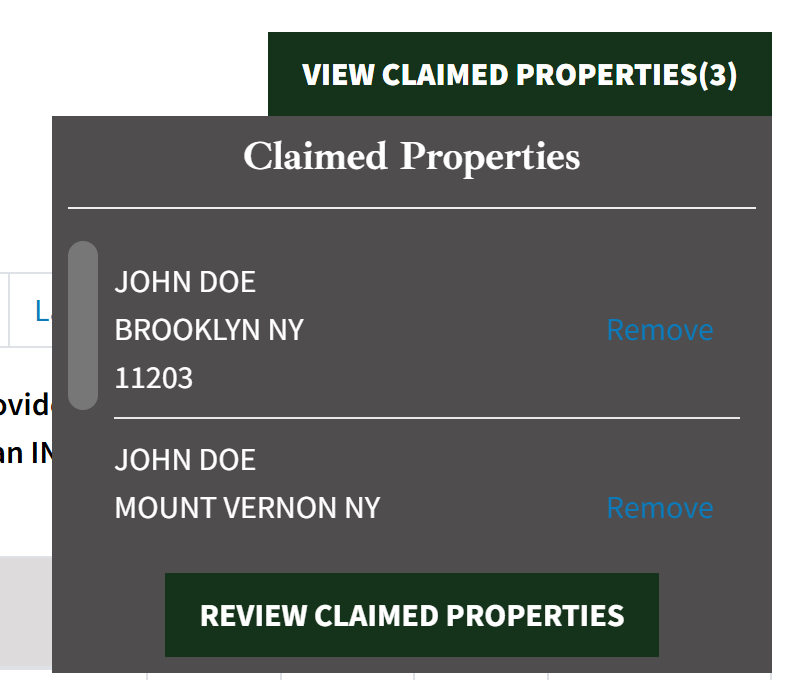
6. Verify your identity. Expect to prove the property is yours. States commonly ask for identification, your Social Security number, and documents linking you to the old address or account. Requirements vary by state and by claim size.
7. Submit and wait. Once you submit, the state reviews your claim and, if approved, sends your money. Processing times differ by state, so note any confirmation or claim number and check back if you do not hear anything.
Avoid the scams
Searching and claiming your own property is always free through MissingMoney.com and official state sites. Be wary of third-party "finders" who charge a fee or a percentage to recover money you could claim yourself. Never pay to search, and stick to the official site (and the ".gov" state pages it links to) rather than lookalike copies.
A Few Extra Tips to Maximize What You Find
• Check for family members too. Search for a spouse, parents, or an estate you help manage. Unclaimed property owed to relatives is common and easy to overlook.
• Search more than once. New property is reported to states regularly, so a search that comes up empty today may turn up a match in six months. Set a reminder to check again.
• Keep your details handy. A list of your former addresses and past employers makes both searching and verifying claims much faster.
• Do not forget federal sources. Some money (such as certain tax refunds or pension benefits) is held by federal agencies rather than states, so those may need a separate search.
Cross Your Fingers - Free Money Might Be Heading Your Way
A layoff is stressful, but finding money you already earned is one of the simplest, lowest-effort wins available to you. MissingMoney.com is free, official, and takes only a few minutes to check. Search your name (and your old names and addresses), review any matches carefully, and file directly with the state. Even a modest match can help cover a bill while you get back on your feet, and it is money that was yours all along.
Ready to look? Start your free search at MissingMoney.com/app/claim-search, then check back every few months for new matches.
This article is for general information and is not financial or legal advice. Unclaimed property rules, dormancy periods, and claim requirements vary by state.
Part of the Dismissal Dollars Series, dedicated to practical ways to bring in a little bit of extra money while you land your next opportunity.


Hello i am new here