


Quitting Social Media After a Layoff: Why Logging Off Protects Your Mental Health

This is an article I have wanted to write for a while. While I believe it matters most during a layoff, I think the advice holds regardless.
Sometime in late 2020, I found myself becoming more and more frustrated with looking through my social media feeds. Here I was, stuck at home after having to cancel multiple international trips that year (that darn Coronavirus), while looking at a feed filled with influencers who were still taking lavish vacations that apparently ignored every social distancing rule.
I was beyond irritated. I was scrolling through my phone trying to understand why I was out all of this money and yet everyone else was able to live their life with no changes. Benefits of being rich, I guess.
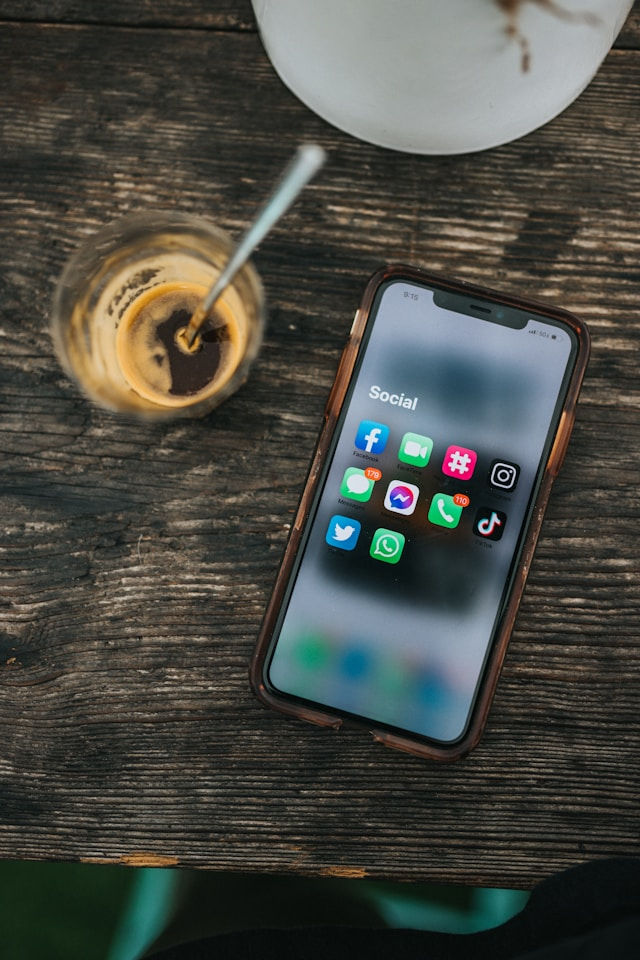
In my frustration, I removed the apps entirely. At first it was an odd sensation. So often when I was bored (waiting in line somewhere or mindlessly watching television), I had used my social media apps to cure my boredom. Now I had no outlet for what seemed to be endless waiting time. It was probably the first time that I realized that I might have had a slight addiction to my phone.
As time went on, I started not even thinking about using apps. And not only was I not thinking about using the apps, I wasn't thinking about what other people were doing with their lives. I started noticing that I was content to be in my apartment, and wasn't trying to furiously plan my next trip after seeing a beach someone had posted online or dream of having a huge house all to myself one day.
I tried to go back and use social media in early 2021 after a nearly year-long break. I thought it would be nice after an extended period away to "catch up" on what I had missed.
Boy, was I wrong.
Immediately upon scrolling, I started to feel bad.
Oh, look at that fun trip she is on. My old college roommate just bought a new house. My old coworker is out celebrating their promotion.
(Not to mention the ads. There were so many ads. Had there been that many ads before? Is this why my shopping had gone down drastically?!)
Needless to say, I removed all of the apps again. No more envy, no more feeling that my own life wasn't enough. I was back to my baseline: content.
I had those feelings of inadequacy at a time when my life was going quite well. If you are going through a layoff, seeing people online living their best lives can feel like a dagger to the heart.
If you have found yourself feeling worse after every session, you are not imagining it. Quitting social media (even temporarily) can be one of the kindest and most practical things you do for yourself during this chapter.
This post looks at why social media hits harder after a layoff, what the research actually says about its effect on mood, and how to step back without feeling cut off from the world.
Why Social Media Hurts More After a Layoff
When you are employed and busy, a quick scroll is background noise. After a layoff, that same feed lands differently. You suddenly have more free time, more anxiety about the future, and a bruised sense of self-worth, which is exactly the emotional state in which comparison does the most harm.
Researchers have a name for what happens next: upward social comparison. It is the habit of measuring your life against people who appear to be doing better. Studies consistently find that this kind of comparison is linked to lower self-esteem and higher symptoms of depression, and it tends to hit hardest when you are already feeling vulnerable. A layoff is precisely that kind of moment.
Worth remembering
One large study estimated that the negative effect of social media on mental health was roughly 20 percent the magnitude of what people experience when they lose their job. Stacking both at the same time (a layoff plus heavy scrolling) is a heavy load to carry.
The Highlight Reel Problem
Here is the real problem with looking at social media: almost nobody posts their layoff. They post the new job announcement, the promotion, the vacation, the milestone. What you see is a curated highlight reel, the best three seconds of someone else's week, and you are comparing it against your full, unedited reality (including the hard parts nobody else can see).
That mismatch is not a fair fight. When you are unemployed and scrolling past a wall of "excited to announce" posts, it is easy to conclude that everyone is thriving except you. In truth, you are seeing a filtered slideshow, not the anxious job searches, the rejections, and the quiet stretches that those same people almost certainly went through. Comparing your behind-the-scenes to someone else's highlight reel is one of the fastest ways to feel like you are falling behind when you are not.
What the Research Says About Social Media and Mental Health
You do not have to take this on faith. A growing body of research links heavy social media use to worse mental health, and (encouragingly) links cutting back to real improvements.
● Cutting back lifts mood. In a University of Pennsylvania experiment (Hunt et al., published in the Journal of Social and Clinical Psychology), 143 students were split into groups. Those who limited Facebook, Instagram, and Snapchat to about 30 minutes a day showed significant reductions in loneliness and depression over three weeks compared to the group that kept scrolling as usual. The effect was strongest for people who were more depressed to begin with.
● More access, more distress. An analysis of Facebook's rollout across US colleges (published in the American Economic Review) found that access to the platform increased severe depression by about 7 percent and anxiety disorder by about 20 percent among students. The researchers point to social comparison with peers as a key driver.
● Heavy use raises the risk. A study in JAMA Psychiatry found that spending more than three hours a day on social media was associated with roughly double the risk of mental health problems, including anxiety and depression, in adolescents.
● Comparison is the mechanism. A 2025 University of Cambridge study found that people with anxiety and depression were more likely to compare themselves to others on social media, and more likely to have their mood swing based on likes and comments. In other words, the exact tendencies a layoff can amplify.
No single study proves that social media alone causes depression, and the effects vary from person to person. But the pattern is consistent and hard to ignore: for a lot of people, less scrolling means a lighter mood. That is a strong argument for quitting social media, or at least stepping back, while you are navigating a job loss.

The Benefits of Quitting Social Media During a Job Search
Stepping away is not just about avoiding harm. It frees up something valuable at a moment when you need it most.
● More mental bandwidth. The hours (and the emotional energy) you reclaim can go into applications, skill-building, rest, or simply feeling like yourself again.
● Fewer comparison spirals. You cannot feel behind a highlight reel you are not watching. Removing the trigger removes a lot of the self-doubt that comes with it.
● Better focus. Job searching takes concentration. Constant notifications fracture your attention and make deep, useful work harder.
● Improved sleep. Late-night scrolling is linked to poorer sleep, and good sleep is one of the biggest protectors of mood and resilience while you are under stress.
● A clearer sense of your own progress. Off the feed, you measure your week against your own goals instead of a stranger's announcement.
● More time for productive tasks. Instead of taking scroll breaks, consider channeling that boredom into studying for a new certification or practicing interview questions.
How to Step Back Without Feeling Cut Off
Quitting social media does not have to be all or nothing, and it does not mean disappearing from the people who matter. A few practical ways to make it stick:
● Start with a defined break. Try a week or two fully off the comparison-heavy platforms. A clear window feels more doable than "forever," and you can always extend it.
● Delete the apps, keep the accounts. Removing apps from your phone adds just enough friction to break the automatic reach-for-the-phone habit, without you losing anything permanently.
Unfortunately, many businesses will only post closures or updates to their social feeds, so keeping the accounts may be a necessity for you. Try logging in on the desktop versions in those cases so that the app isn't back on your phone.
● Set a hard cap if you stay on. If a full break is not realistic, the research suggests around 30 minutes a day is a meaningful target. Use your phone's built-in screen time limits to enforce it.
Apps such as One Sec can enforce mandatory pauses to make you stop and think about how much you are scrolling.
● Keep the connection, drop the feed. Direct messages, group chats, and phone calls give you the real human contact you need (which genuinely helps mood) without the endless scroll of everyone else's highlights.
You are also potentially trying to build up your network to help with your job search. Keeping real connections is a great way to start building the relationships that will lead to references and referrals in the future.
● Replace the habit, do not just remove it. Line up something to reach for instead: a walk, a book, a course, coffee with a friend, or focused time on your search. An empty slot tends to get filled by old habits.
Important Reminder For Your Self-Doubt
A layoff is a chapter, not a verdict. The people whose posts make you feel behind are showing you an edited version of their lives, not the whole story. Logging off gives you space to write your own next chapter without an audience you never asked for.
Happiness Is One App Removal Away (Or At Least More in Reach)
You may think that this topic is silly and that you are not so affected that a break would really change anything.
I thought the same once, as did many of my friends. But as each of us broke away from social media, we got more clarity on what a mood destabilizer it could be.
After a layoff, your feed is not a neutral place. It is a stream of other people's best moments arriving at the exact time you are most likely to compare and feel worse for it. The research is clear that heavy use is linked to depression and loneliness, and that cutting back can measurably improve how you feel.
You do not have to quit forever. But giving yourself permission to log off, even for a couple of weeks, protects your mental health, frees up energy for your job search, and reminds you of a simple truth: your worth was never measured by a feed. Quitting social media, for now, might be exactly the reset this moment calls for.
If feelings of depression or hopelessness persist, please consider reaching out to a licensed mental health professional. A layoff is a genuinely hard experience, and support helps.


Comments